
Scandinavia has a way of making familiar ideas about travel feel rather small. Here, roads wind beside deep blue inlets, summer evenings linger long after dinner, and reindeer graze across landscapes that seem to stretch towards the edge of the world. Yet the region is not just a collection of dramatic views. Denmark, Norway and Sweden each have their own character, from Copenhagen's lively café culture to Norway's rugged coastline and Sweden's vast northern forests. For first-time visitors, the trick is knowing how to fit these different experiences into a trip without spending most of it in transit.
Getting Around Without Rushing
Scandinavia is well suited to travellers who enjoy combining transport methods. Trains connect major cities and offer scenic routes, ferries reach islands and coastal communities, and buses fill gaps in the network. Domestic flights can save time over long distances, but they are not always necessary when the journey itself is part of the experience.
Organised itineraries can simplify a multi-stop trip, especially when connections involve several operators or remote destinations. Travellers comparing providers may come across Firebird Tours while researching guided travel arrangements. Before booking any package, check exactly what is included, how much free time is available, and whether excursions, meals and transfers are part of the quoted price.
Independent travel allows more flexibility, but distances can be deceptive on a map. Mountain roads, ferry crossings and infrequent rural services may extend journey times. Avoid stacking several major stops into consecutive days, and leave some breathing room for weather changes or a spontaneous detour.
Start with a Route That Makes Sense
The first decision is how much ground to cover. Norway is the obvious choice for travellers dreaming of steep mountains, waterfalls and fjords, while Sweden combines stylish cities with lakes, forests and Arctic wilderness. Denmark has a gentler landscape, but its historic towns, cycling culture and food scene make it well worth including. Trying to squeeze all three countries into a few days can leave little time to enjoy any of them properly.
For a first visit, choose one or two main bases and build outward from there. Oslo and Bergen make a useful pairing in Norway, Stockholm and the surrounding archipelago work well in Sweden, and Copenhagen is a convenient introduction to Denmark. Travellers who want a broader itinerary can explore organised tours to Scandinavia, particularly if they would rather leave transport connections and accommodation arrangements to someone else. Whatever the approach, allow time for the journey itself, since some of the region's most memorable scenery appears between destinations rather than at the end of a road.
Norway's Fjords Are Worth Slowing Down For
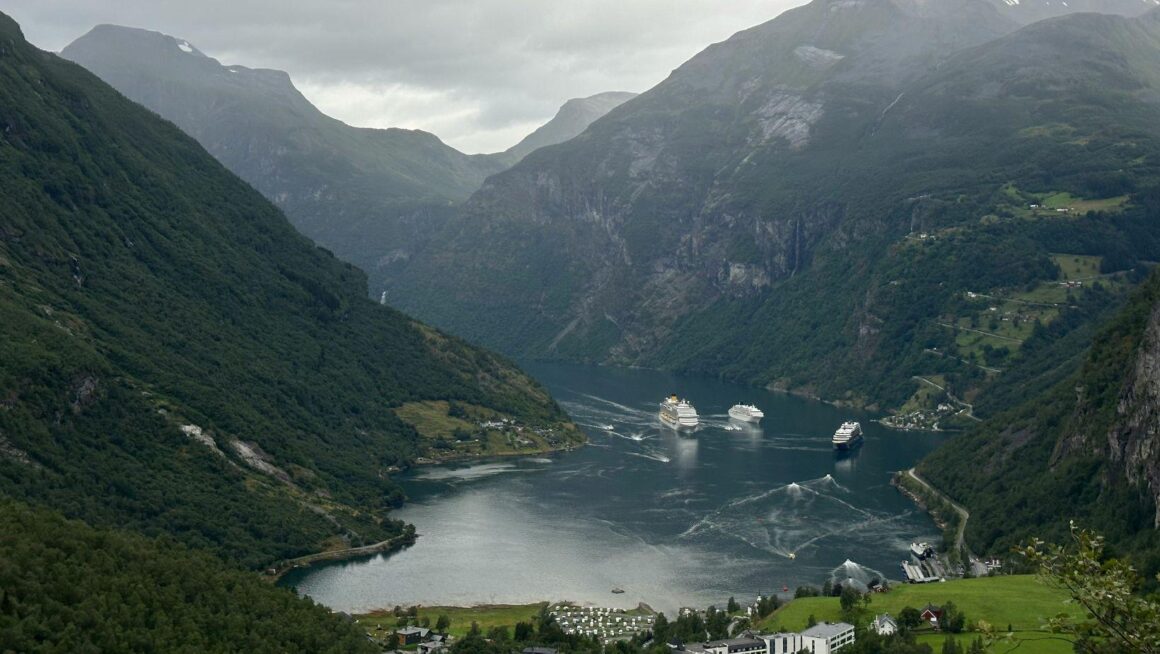
Norway's fjords were carved by glaciers over thousands of years, leaving steep-sided waterways surrounded by mountains and cascading streams. The result is scenery that changes constantly with the weather. On a bright morning, the water may reflect green slopes and distant peaks; a few hours later, low cloud can wrap the cliffs in mist. This unpredictability is part of the appeal, so avoid planning every outdoor activity around a single perfect forecast.
Geirangerfjord and Nærøyfjord are among the country's best-known examples, but there is no need to chase every famous viewpoint. A boat trip can reveal the scale of the landscape from water level, while a walk above a village may deliver equally impressive views without the crowds. Bergen is a practical starting point for exploring the western coast, with colourful waterfront buildings and access to mountain trails close to the city centre.
Rail travel is another highlight. The Bergen Railway crosses high mountain terrain between Oslo and Bergen, making the journey an attraction in its own right. Connecting trains, ferries and buses can help travellers reach smaller communities, although schedules may be less frequent outside the main tourist season. Check connections before setting out, especially when a missed departure could mean a long wait.
Chasing the Midnight Sun in the Far North
Above the Arctic Circle, summer brings a phenomenon that can make ordinary timekeeping feel irrelevant. Around the summer solstice, the sun remains above the horizon throughout the night in parts of northern Norway and Sweden. Instead of a conventional sunset, the landscape takes on a soft golden glow, and the hours after midnight can be surprisingly good for walking, photography or simply sitting beside the water.
Tromsø is a popular base for northern Norway, combining cafés and museums with access to coastal excursions and mountain scenery. Further east, Swedish Lapland has wide-open landscapes, forests and small communities where outdoor activities often take centre stage. The midnight sun is seasonal, with the exact period depending on latitude, so check local dates before booking if witnessing it is a priority.
The unusual light can disrupt sleep even when temperatures are cool. An eye mask, a room with effective curtains and a flexible daily schedule can make a difference. Bring layers too. Arctic summer does not guarantee warmth, and wind or rain can make a seemingly mild evening feel chilly.
Reindeer, Sámi Culture and Respectful Travel
Reindeer are closely associated with Scandinavia's northern landscapes, but seeing them should not be treated as a guaranteed wildlife encounter. They move through extensive grazing areas, and their presence varies with the season and local conditions. In northern Norway and Sweden, reindeer herding is an important part of Sámi culture, whose history and traditions extend across the northern parts of Norway, Sweden, Finland and Russia.
Visitors interested in learning about Sámi life should look for experiences led by Sámi hosts or organisations that clearly explain their cultural connection and approach to tourism. Depending on the location and season, these may include discussions of traditional livelihoods, food, handicrafts or reindeer herding. Listen to the people sharing their knowledge rather than treating cultural practices as performances arranged solely for visitors.
If you encounter reindeer on a road or in the countryside, keep your distance and avoid trying to feed or approach them. Follow local guidance, and be particularly careful when driving through areas where animals may cross unexpectedly. Responsible choices help protect both wildlife and the people whose livelihoods depend on the land.
What to Pack for Changeable Nordic Weather
Packing for Scandinavia is less about preparing for one temperature than being ready for several conditions in a single day. A waterproof outer layer, warm mid-layer and comfortable walking shoes will cover much of the region's summer weather. In the mountains and far north, add insulating clothing even if the forecast looks mild. Sunglasses and sunscreen are useful too, especially during long days outdoors when it is easy to underestimate the strength of the sun.
Daylight varies dramatically throughout the year. Summer offers extended opportunities for sightseeing, while winter brings shorter days and a greater emphasis on indoor attractions, cosy restaurants and seasonal activities. Neither season is universally better. Your choice should depend on whether you are drawn to long hikes and midnight light or snow-covered landscapes and the possibility of seeing the northern lights.
A small amount of planning can also prevent unnecessary expense. Food and accommodation can be costly in popular Norwegian and Swedish destinations, particularly during peak periods. Booking early, using supermarkets for some meals and choosing public transport where practical can help keep a trip within budget.
Make Space for the Everyday Scandinavia
The region's appeal extends beyond headline attractions. Spend an unhurried morning in a Copenhagen bakery, swim from a designated lakeside spot in Sweden during summer, or sit down to a simple seafood meal in a Norwegian harbour town. These everyday experiences reveal something about local life that a succession of scenic stops cannot provide.
For a first visit, Scandinavia is best approached with curiosity rather than a race to collect landmarks. Give the fjords time to unfold, stay awake for the unusual summer light, and learn about northern communities from the people who live there. With a manageable route and room for unexpected moments, the region becomes more than a collection of postcard views. It becomes a place worth returning to, in another season and at a different pace.