
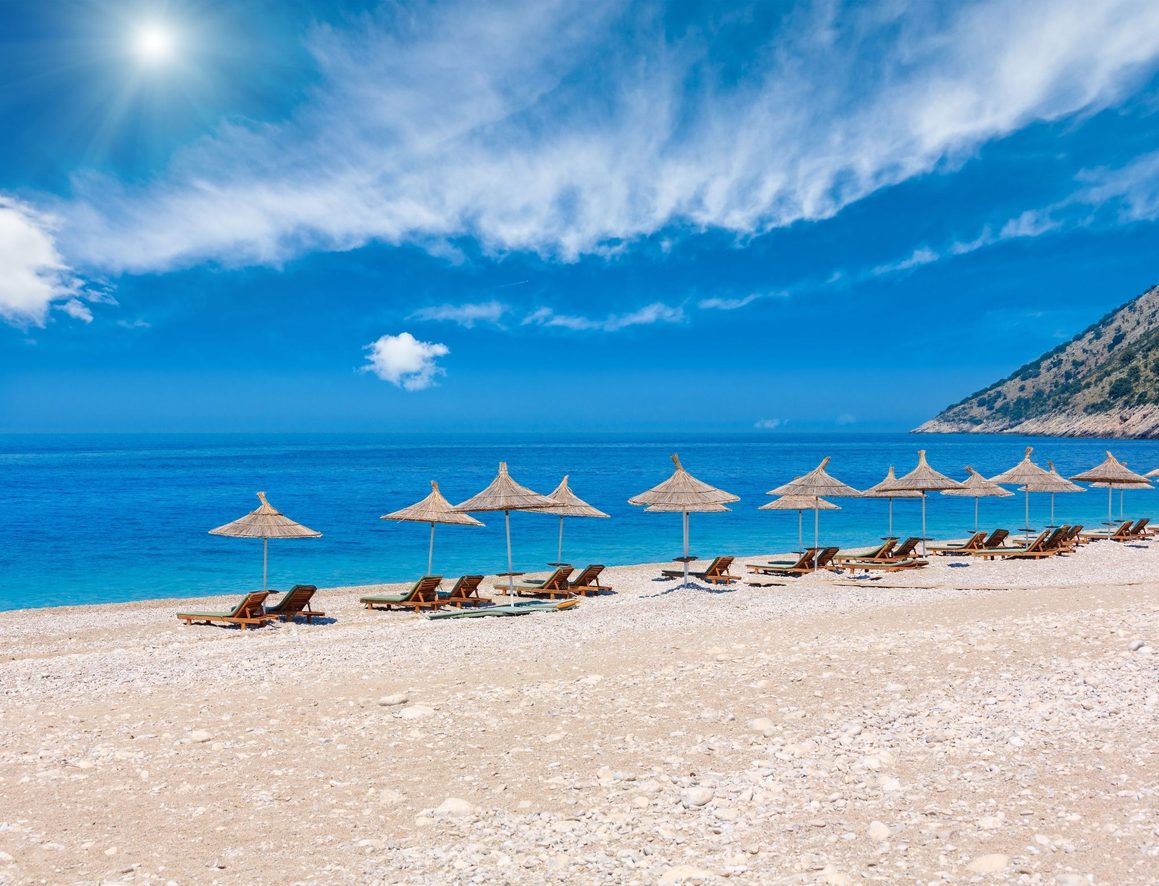
Every summer, a few hundred thousand people land in Tirana and head immediately for the coast. It is a rational decision. The Riviera is genuinely beautiful and the water genuinely is that colour. But it does mean that an entire half of the country, the inland half, stays quiet in August while Ksamil runs at ten times its population.
The east and the south of Albania hold the things the coast does not: a protected wild river, a canyon you can raft through, Orthodox churches full of frescoes in villages of forty people, and thermal springs where the Ottomans built a bridge over the steam. None of it is difficult to reach. Almost none of it is busy.
Korça, And The Highlands Nobody Photographs
Korça sits at 850 metres in the southeast, close to the Greek and North Macedonian borders, and it does not feel like the rest of the country. The architecture is late nineteenth century and low, there is a covered bazaar that has been restored without being sterilised, and the local beer has a museum. Winter brings snow and a genuine carnival. Summer evenings are cool enough to need a jacket, which after a week on the coast feels like a gift.
Half an hour above the town is Voskopoja, which in the eighteenth century was one of the largest cities in the Balkans, with a printing press and an academy, and which now has a few hundred residents and five surviving churches covered floor to ceiling in frescoes. The contrast between what the place was and what it is takes a while to absorb.
North of Korça, Pogradec sits on Lake Ohrid, one of the oldest lakes on earth and shared with North Macedonia. Stop at the Lin peninsula on the western shore for early Christian floor mosaics that sit in the open air above the water with almost no fuss made about them.
Përmet, Benjë and the wild river
Përmet, in the south, is the base for the part of inland Albania that has been getting international attention. The Vjosa was declared a national park in 2023, the first wild river national park in Europe, protecting one of the last large rivers on the continent that runs undammed from the mountains to the sea. You can raft it, swim in it, or simply sit beside it and register that this is what a river looked like before we started managing them.
Ten minutes from town, the thermal springs at Benjë sit under a stone Ottoman bridge, a set of natural pools at bath temperature where the Lengarica river comes out of a canyon. Go early or late. Midday in August it is busy with Albanian families, which is its own kind of pleasure but not a quiet soak.
Përmet itself is a small, tidy town known for cooking and for gliko, fruit preserved in syrup and served to guests with a glass of water. The tourism here is still mostly domestic, which shows in the prices.
Osum Canyon And The Road That Punishes Cars
Near Çorovoda, an hour and a half from Berat, the Osum river has cut a canyon up to 80 metres deep and 26 kilometres long. From roughly March to June, when snowmelt fills it, it is rafted. Later in summer the water drops and it becomes a walk through a gorge with waterfalls at the edges. Either version is a day well spent, and both are arranged through local operators rather than anything institutional.
If you are combining the canyon with the southeast, be warned about the SH75, the road between the Gjirokastër area and Korça. It is paved, spectacular and in poor condition, with long stretches of ruts and potholes and a summit above 1,100 metres. Allow three to four hours without stops and do not attempt it in the dark or heavy rain.
How To Actually Do This
Inland Albania is where the public transport argument ends. The coast has buses. Voskopoja does not, Benjë does not, and the Osum canyon certainly does not. You need a vehicle, and the cheapest way to get one is to skip the international desks and hire a cheap car in Albania from a local supplier, where small cars start around 7 to 12 euros a day out of season and the deposit is low or waived. Take something with a bit of ground clearance. The main roads are fine, but the last few kilometres to the places in this article frequently are not.
The other option, if driving mountain roads is not your idea of a holiday, is to base yourself in one town and let someone else handle the movement. Local operators run canyon trips, rafting and guided experiences out of Berat and the south, and for the Osum in particular a guided trip is the sensible choice rather than a preference, because the water level changes what is possible from week to week.
Most people flying in will want to get away from Tirana on arrival, and a private transfer from Tirana airport with a fixed price and a licensed driver removes the one genuinely unpleasant part of the trip, which is negotiating with the taxi rank after a late flight with no local currency.
When To Come
The inland seasons run opposite to the coastal ones. Spring, roughly April to June, is when the rivers are full, the meadows are absurd and the canyons are rafted. Autumn, September into October, brings the harvest, the wine and the light. July and August are hot in the lowlands but genuinely pleasant at altitude in Korça and Përmet, which makes them a sound escape if you have overdone the beach.
Winter is a real option too, if you like empty places. Korça gets snow, Voskopoja has a small ski scene, and the whole southeast settles into something quiet and domestic that almost no foreign visitor ever sees.
One practical note for everywhere in this article: carry cash in lek. Card acceptance in the larger towns is now normal, but the thermal springs, the church caretaker in Voskopoja and the man who parks your car at the canyon all work in notes, and the nearest cash machine may be a valley away.