

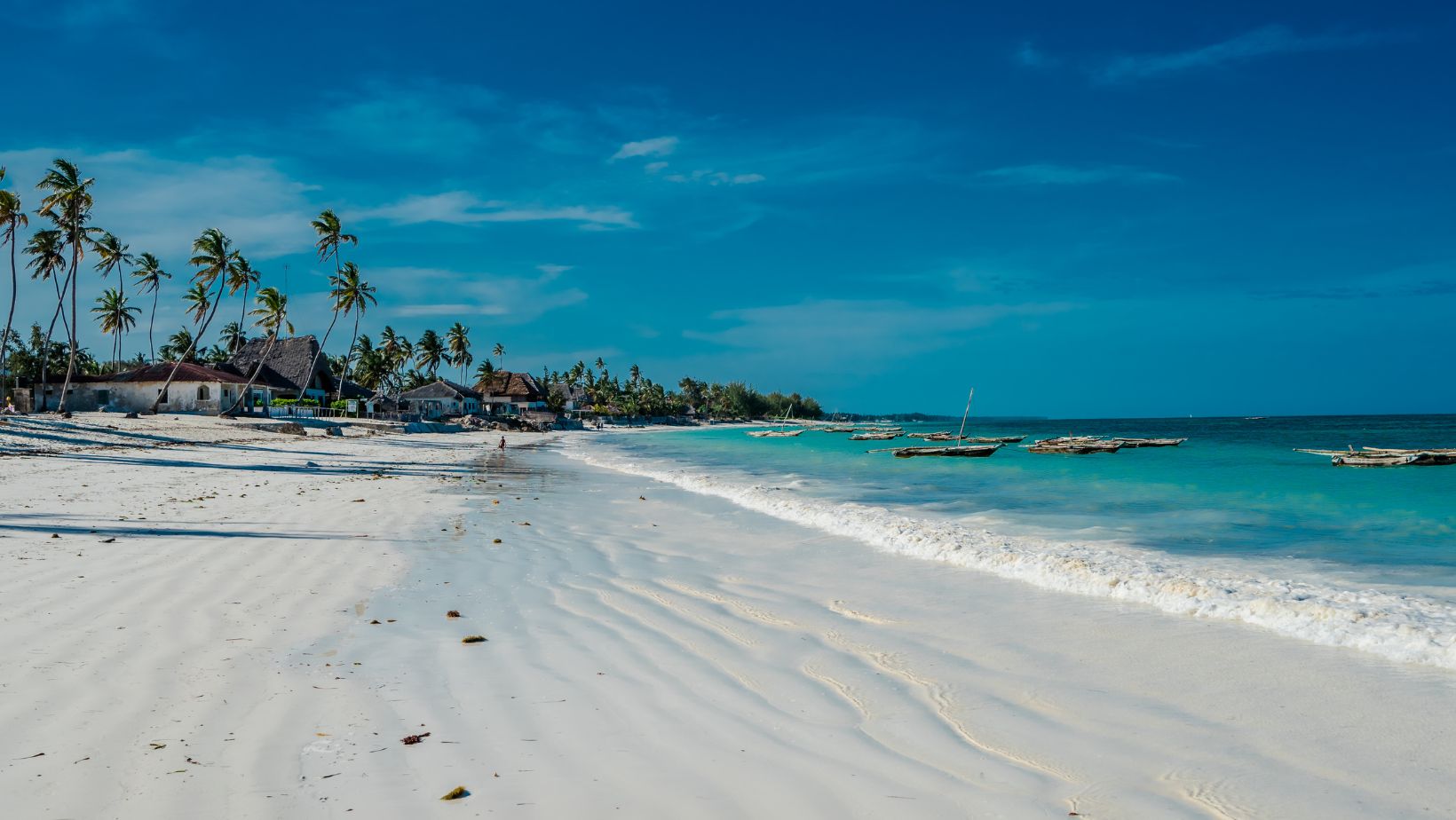
Zanzibar has a knack for recalibrating your idea of “blue.” Not just the postcard teal that looks good on social media, but the full spectrum you notice when you slow down: pale aquamarine over sandbars, inky sapphire beyond the reef, and that glassy, almost metallic sheen the Indian Ocean gets just before sunset.
What makes Zanzibar special isn’t simply that it’s tropical. It’s the way water, light, and coastline collaborate all day long. One hour you’re looking at a lagoon so clear you can count ripples in the sand; the next, the tide has pulled back and revealed a walking path of seaweed gardens and tidal pools. And because the archipelago sits off Tanzania’s coast, the ocean views come with a sense of openness—wide horizons, warm winds, and dhows cutting across the water like something out of another era.
If you’re planning a trip and you want it to feel distinctly “island” rather than a generic beach holiday, it helps to think in experiences rather than hotel categories. That might mean timing your day around tides, choosing a coast based on sea conditions, or even building an itinerary around lagoon time and reef time. For travellers interested in experiencing island life beyond the mainland, Zanzibar’s turquoise bays and Indian Ocean panoramas are more than scenery—they’re the structure of the day.
The Science (And Magic) Behind Zanzibar’s Turquoise Water
The “turquoise bay” effect isn’t an accident or a filter. It’s a combination of geology, sunlight, and depth. Much of Zanzibar’s coastline is fringed by reefs that act like natural breakwaters, creating shallow lagoons close to shore. Shallow water over pale sand reflects more light back to your eye, which is why it reads as bright blue-green.
Reefs Create Calm Lagoons—And Perfect Swim Windows
On many beaches, you’ll notice two different oceans: the calm, protected lagoon inside the reef, and the deeper, darker water beyond it. The lagoon is often where families wade and where first-time snorkellers feel comfortable. Beyond the reef, conditions can be choppier, but visibility is frequently excellent on calm days—ideal for boat-based snorkelling.
The Tide Schedule Is Zanzibar’s “Daily Planner”
Zanzibar is strongly tidal, especially on the east and southeast coasts. At low tide, the water can retreat dramatically, exposing sand flats that stretch far out. That can surprise visitors expecting an always-swimmable beach. The flip side? Low tide reveals a different Zanzibar—one where you can walk over seagrass beds, watch local seaweed farmers at work, and see small marine life in pools.
If you want the classic “swim anytime” feel, certain areas (particularly on the north coast) tend to hold deeper water closer to shore, making them more consistent for dipping in throughout the day.
Choosing Your Coastline: The View Changes The Experience
Zanzibar isn’t one uniform beach. The island’s coasts face different directions, catch different winds, and offer different kinds of ocean “mood.”
Picking where to base yourself is less about luxury vs. budget and more about what you want the water to do for you.
North Coast: Long Sunsets And Easy Swims
Beaches around Nungwi and Kendwa are known for calmer swimming conditions across more of the day, plus those classic westward-leaning sunset scenes—gold light over boats, silhouettes of palms, and a horizon that stays interesting even when you’re doing absolutely nothing.
If your ideal getaway includes evening beach walks and predictable swim time, the north often fits the bill.
East Coast: Luminous Mornings And Lagoon Life
The east is where Zanzibar’s turquoise can look almost unreal in early light. Beaches like Paje and Jambiani offer wide-open skies and a rhythm shaped by tides. The trade winds also make this side a hub for kitesurfing, which adds a kinetic, joyful energy to the seascape—bright kites scattered like confetti against the blue.
Come here if you like mornings, don’t mind planning around tides, and enjoy seeing local coastal life unfold in real time.
South And Protected Areas: Quieter Corners And Conservation-Led Experiences
Southern and more remote zones can feel less busy, particularly if you’re aiming to escape the “every beach has a soundtrack” vibe. In some areas, marine conservation efforts are more visible, whether through protected reefs, guided snorkel protocols, or community-led tourism initiatives.
Ocean Views That Do More Than Look Good: What To Actually Do On The Water
It’s easy to treat the Indian Ocean as background. Zanzibar rewards you when you treat it as the main event.
Snorkelling And Reef Time: Go Beyond “Just A Boat Trip”
Not all snorkelling is created equal. Water clarity, current, and coral health vary by location and season. If you’re serious about it, ask a few practical questions before you book: How long is the transfer? Is there a guide in the water? Do they avoid standing on coral? Do they brief on currents?
Even casual snorkellers will notice the difference when you go with operators who treat reef systems with respect.
Dhow Sailing At Sunset: The Classic For A Reason
Yes, it’s popular. It’s also genuinely memorable when done well. The appeal isn’t luxury; it’s the perspective shift. From a traditional wooden sailboat, Zanzibar’s coastline looks softer and more cinematic. The sea breeze cools the day down, and the changing light makes even familiar beaches look new.
Sandbanks And Shallow Lagoons: Zanzibar’s “In-Between” Landscapes
Some of the most striking views happen where land and sea blur. Sandbanks—temporary islands that appear with the tides—create that surreal sense of standing in the middle of the ocean with water in every direction. They’re also fragile environments, so keep an eye out for trips that minimise impact and avoid overcrowding.
How To Plan Your Trip Around The Water (So The Water Doesn’t Surprise You)
Zanzibar is easy to love and also easy to misread if you arrive with generic beach expectations. A little planning goes a long way.
Here’s a simple checklist that keeps the ocean on your side:
- Check tide times for your beach (especially on the east coast) and plan swim time accordingly.
- Pack reef-safe sunscreen and a lightweight cover-up for long, bright days on the water.
- Bring water shoes if you plan to walk at low tide—some areas have coral fragments or sea urchins.
- If you’re photographing the “turquoise,” aim for late morning to early afternoon light; sunsets are best on west-leaning coasts.
- Prioritise operators who brief on reef etiquette and keep group sizes reasonable.
The Takeaway: Zanzibar’s Colour Palette Is An Itinerary, Not A Backdrop
In Zanzibar, the turquoise bays aren’t just something you glance at from a lounger; they shape how you move, when you swim, what you explore, and how you remember the island. The Indian Ocean views—wide, bright, and constantly changing—create a sense of space that’s hard to replicate elsewhere.
So when you plan your getaway, don’t just choose a beach. Choose a relationship with the water: lagoon mornings or sunset sails, reef adventures or sandbank stillness, north-coast ease or east-coast rhythm. Get that right, and Zanzibar stops being a destination you “visit” and becomes a place you feel in your body long after you’ve left.