
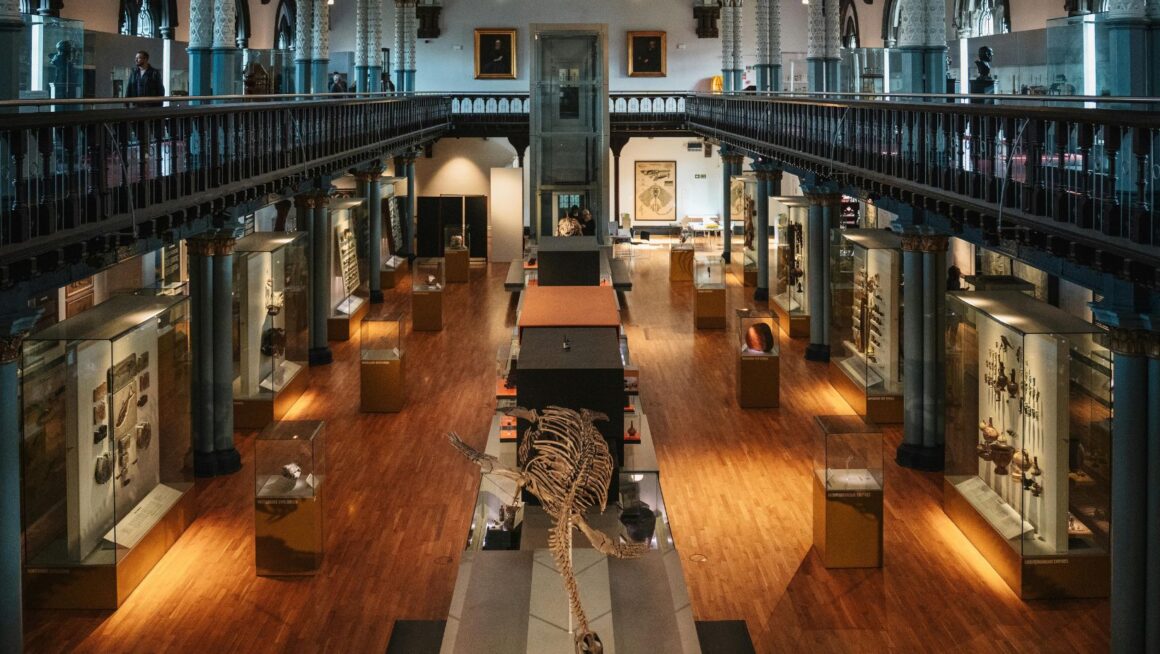
Wood Beneath Dim Light
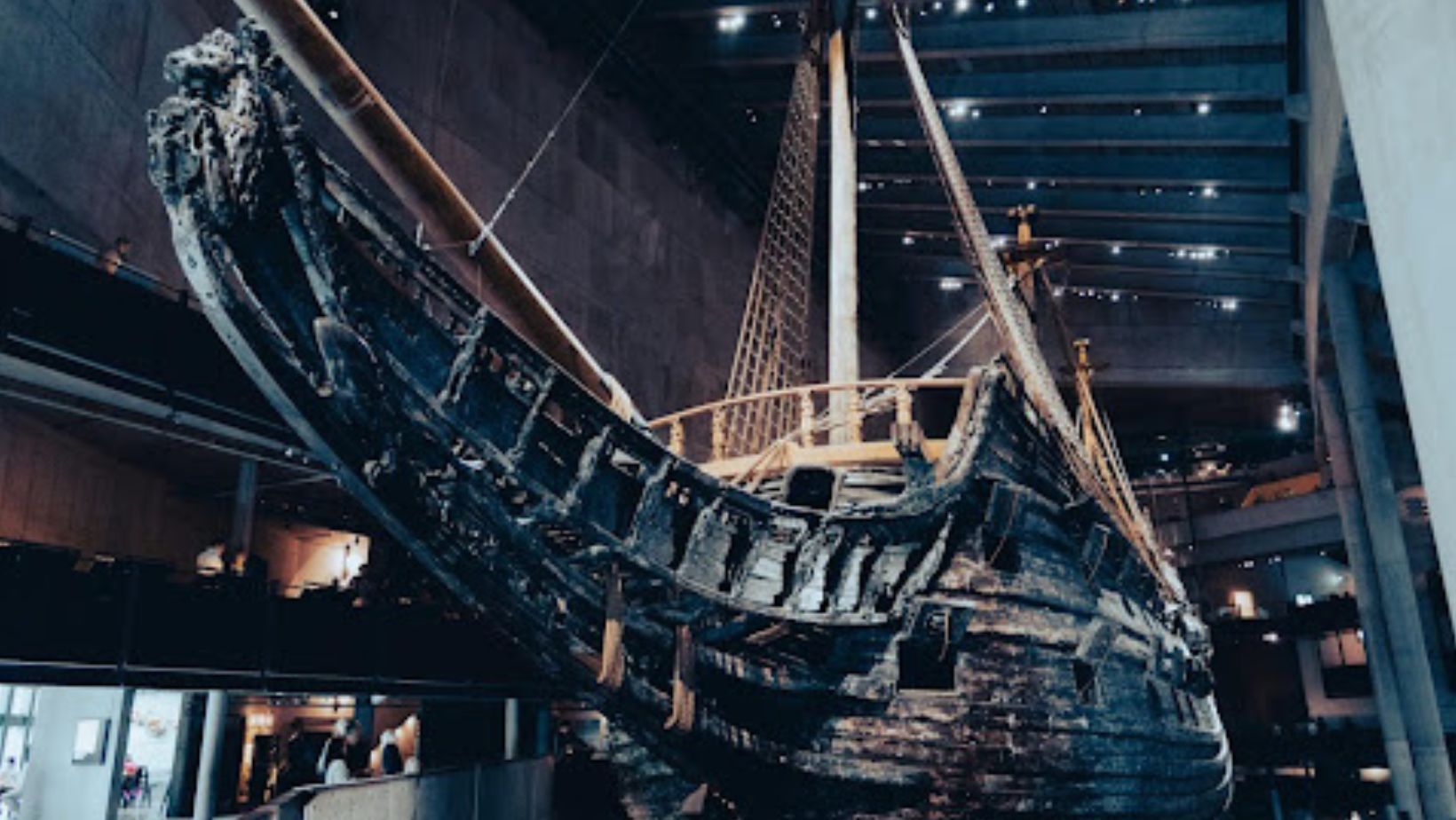
Inside the Vasa Museum, the air feels slightly cooler than expected.
The ship rises from shadow, dark timber absorbing light rather than reflecting it. Carved figures cling to its stern in layered detail, some faded, some still sharply outlined. The hull leans inward as though still holding the weight of water it once carried.
You circle it slowly. The ship does not move, yet it feels suspended. The Baltic remains outside, somewhere beyond Djurgården’s trees, but inside the museum the sea becomes memory instead of horizon.
Footsteps soften against wooden floors. The room hums faintly with quiet voices.
The vessel remains intact, but not triumphant.
South Through Low Forest
Later, as the trains from Stockholm to Copenhagen follow long stretches of forest and lake before crossing open water toward Denmark, the maritime atmosphere shifts from enclosed timber to wider coastal sky.
Inside the carriage, nothing feels abrupt. A reflection settles briefly in the window. Pine trees repeat in steady rhythm. Lakes appear in sudden silver bands and vanish again behind tree line.
Stockholm thins gradually. Bridges stretch across water without ceremony. The land flattens, then gathers again in subtle rises.
Movement remains horizontal, steady, unannounced.
Where Light Becomes Movement
Copenhagen feels different in tone.
The idea of a Copenhagen to Malmo train emerges almost casually in conversation, though the short crossing over the Øresund carries its own quiet shift — city giving way to water, then returning again on the opposite shore.
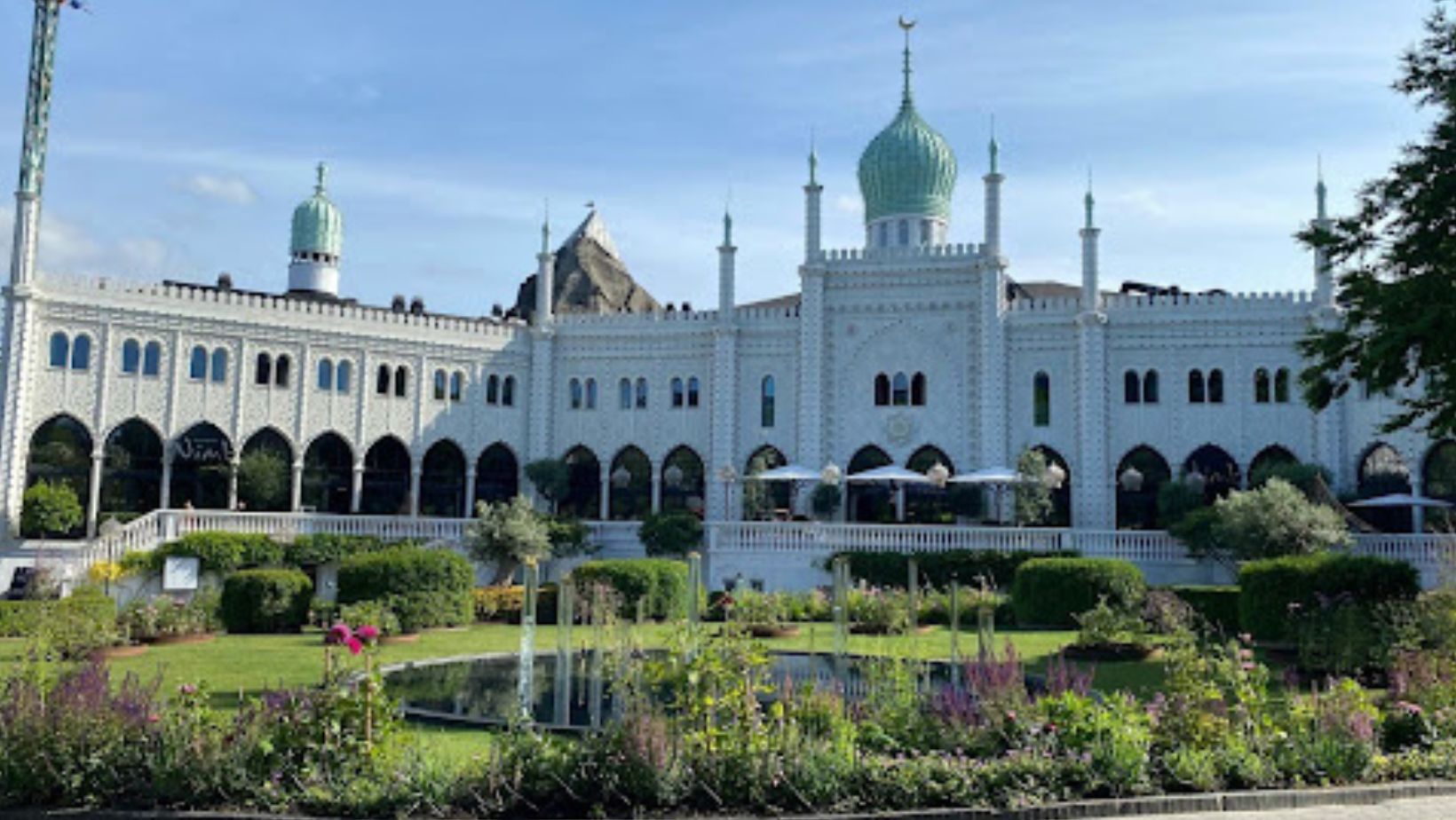
Tivoli Gardens sits near the centre of Copenhagen, yet it does not compete with government buildings or commercial streets. It glows softly at dusk. Lanterns hang in measured intervals. Pathways curve gently rather than extend in strict lines.
The atmosphere feels layered — amusement rides rising above hedges, music drifting from open stages, reflections gathering in small ponds.
Light behaves playfully here.
Between Hull and Lantern
The Vasa rests in shadow, its wood darkened by centuries. Tivoli exists in brightness, even after sunset. One preserves stillness. The other cultivates motion.
Yet both gather people into contained spaces. Inside the museum, you walk in circular paths around the ship. Inside the gardens, you move along curved walkways bordered by trees and lights.
Travel between them compresses maritime history and urban leisure into sequence. Forest, bridge, harbour, park.
The shift feels atmospheric rather than monumental.
From Timber to Garden Path
In Stockholm, carved wood recalls storms and saltwater voyages. In Copenhagen, trimmed hedges and illuminated arches recall evenings spent outdoors beneath soft northern sky.
The Baltic holds its muted tone between both cities. The Øresund narrows the distance physically but not atmospherically.
Rail binds them quietly. Seats align. Platforms open and close.
The rhythm continues unchanged.
When Evening Settles Over Water
Later, the outline of the Vasa’s stern overlaps faintly with the silhouette of Tivoli’s rides against dusk. Timber echoes in wooden benches beneath lantern light. The Baltic and the harbour merge in recollection.
What remains is atmosphere — salt air turned inward, music carried briefly across open space, steel rails tracing a path between capitals without emphasis.
The journey does not resolve into comparison. It continues.
Somewhere beyond the final crossing, the ship still rests in dim light. The gardens still glow at night. And the line between them carries shadow and brightness forward along the same northern corridor.
Where Timber Meets Evening Air
As night deepens, the museum’s interior darkens into a near silhouette, the ship’s details fading into mass rather than ornament. In Copenhagen, lanterns flicker against tree branches, their reflections wavering in shallow pools. The difference between enclosed hall and open garden becomes less distinct in low light. Both spaces hold quiet pockets of stillness beneath the same northern sky.
Along the Narrow Strait
Later, the memory of carved stern and illuminated pathway settles into something less specific — wood grain, soft music, the brief sway of a carriage crossing water. The strait between Sweden and Denmark feels narrower in recollection than it did on a map. Rails continue somewhere beyond sight, linking shadowed hull and glowing hedge without asking either to define the journey fully.